

Claude Adds Legal Support, Google Pushes AIO, and the Risk of Relying on SEO Alone
Plus: Laura Ramos James on Turning Community Trust Into Scalable Growth

👋 Good morning. Chris Dreyer here. Far too many personal injury firms still rely on SEO as the backbone of their growth strategy. I get the allure. But when search behavior shifts or algorithms change, case volume takes a hit. This week, I break down why SEO alone creates concentrated risk and what firms need to do to build steadier, more durable demand.
Also in this edition, Google is tightening how search works in practice. Follow-up questions from AI Overviews now route users directly into AI Mode, keeping more interactions inside Google’s interface. That means less traffic to your website. It also means a change in strategy since AIO reshapes how prospects encounter your firm (if they reach your website at all).
And in PI news, a jury verdict against Uber last week rejected the company’s liability defense in a sexual assault case involving one of its drivers.
Let’s dive in.
📆 [Save the Date: Oct. 4-6]

Countdown to the personal injury event of the year.
More leads don’t build legacy.
Firms with industry-leading marketing and intake do.
PIMCON is where personal injury attorneys master conversions, client experience, and sustainable firm growth. It’s built for decision-makers who want sharper strategy, better execution, and real-world results long after the sessions end.
October 4–6 • Scottsdale, AZ
Get your early bird tickets now before they sell out.

SEO Can’t Carry Your Firm’s Growth on Its Own

Novice investors often concentrate their money in one or two familiar stocks. Microsoft. Amazon. Apple. Names they trust.
No diversity. Concentrated risks.
Then the market turns, and their portfolio takes a hit.
That is exactly how many law firms treat marketing. Driven by the hyper-competitive nature of personal injury law, they concentrate investment in one channel, usually SEO, and assume steady growth will follow.
The results rarely match expectations.
I’ve seen it firsthand. Too often, in fact.
Firms lean into SEO as their primary growth engine. Then Google rolls out algorithm changes, traffic slows, and case volume plummets.
Instead of investing in an index fund, so to speak, these law firms opted to concentrate risk by relying on a single channel to build the demand pipeline.
But legal marketing works more like an index fund than picking a single stock. Concentration invites volatility. Diversification stabilizes performance.
Don’t get me wrong.
SEO matters. Done right, it builds awareness at the top of the market, shapes consideration in the middle, and captures high-intent demand at the bottom. But no single channel should carry the full burden of law firm growth.
Research reinforces this shift, in particular Byron Sharp’s work on mental availability.
In his seminal book, How Brands Grow, Sharp argues brands grow mainly by increasing:
Mental availability – easy to recall and recognise
Physical availability – easy to buy (distribution, price, formats, channels)
In personal injury, your marketing strategy must achieve both if you want to drive penetration, trust, and cases. Mental availability means people think of your firm almost immediately. It’s when someone remembers your name after a crash. When a friend recommends you without looking you up. When your brand feels familiar before the first click.
Physical availability, in simple terms, means you are easy to reach. You show up in search results. You answer the phone. Intake moves fast. Injury victims understand the fine print. Signing the case feels simple.
But it’s a classic mistake to overinvest here.
Effective personal injury marketing requires broad targeting. To generate steady case flow, aim for category reach. That means going beyond SEO.
As Sharp says, growth does not come from reaching a small, highly targeted group again and again. It comes from reaching more category buyers over time. From building brand recall across the market. From making your firm feel familiar long before you get a call.
I made the point before that I’m persuaded by the 95:5 Rule. Here’s what I wrote:
It’s reasonable to assume that in a typical PI funnel, the people at the decision stage, the ones ready to call after searching “personal injury lawyer near me,” represent only about 5% of potential buyers at any given time.
But if you only target the people already in the market, you limit growth to the demand that already exists.
High-growth PI firms understand this. They plan media in combination. They build mental availability across the market while strengthening physical availability at the point of decision. They treat search as one part of the growth engine, not the engine itself.
Below, I share a playbook that will help you get this right. And make sure you get this book.

How to De-Risk Your Marketing and Stabilize Case Flow

High-performing firms focus on outcomes, not activity. They track whether marketing consistently produces signed cases instead of counting campaigns or impressions.
Some moves to consider:
Plan your spend for reach, not just capture. Invest in broad targeting. Allocate budget to people who are not ready to call a lawyer yet. Keep the majority of investment aimed at broad audiences (PPC, OOH, TV, radio) while a smaller portion focuses on in-market demand. That builds future case flow while still converting today’s searches.
Balance brand and performance with intent. Tie 60% of your Facebook ads to brand and 40% to performance marketing. Brand builds familiarity across the market. Performance converts existing demand. High-growth firms invest in both at the same time. They do not shut off brand activity when search leads are strong. They treat awareness and conversion as one system.
Move from “SEO strategy” to “search presence strategy.” Search no longer lives only on results pages. People discover firms through AI answers, map packs, video, social, and referrals. Optimize for visibility across all of it. Structure content so AI systems can understand, cite, and surface it, not just so it ranks on a page. Google is doubling down on AIO. Search presence ensures your firm continues to show up.
Optimize for understanding, not just rankings. The next wave of discovery rewards clarity. Plain-language explanations of claims, processes, timelines, and outcomes help both humans and AI interpret your expertise. Firms that teach clearly get surfaced more often and trusted faster.
Measure what produces cases, not what produces activity. Traffic, impressions, and keyword movement are signals. Signed cases, intake speed, cost per acquisition, and pipeline consistency are outcomes. At Rankings, we’re increasingly making the case to our clients that they shift reporting toward business results so decisions follow impact, not what any one channel does.

Google Will Route AI Overview Follow-Ups Directly Into AI Mode

Google will now move users directly into AI Mode when they ask a follow-up question from an AI Overview, tightening the transition from traditional search results to a conversational experience. The change is now available on mobile, according to reporting by Search Engine Land.
The update also arrives with a major model shift. Google is making Gemini 3 the default model powering AI Overviews globally, meaning AI Overviews will run on Gemini 3 by default worldwide.
Google says it made the change based on testing. Robby Stein, Google’s vice president of product for Search, wrote that the company found people prefer an experience that “flows naturally into a conversation,” and that keeping context from AI Overviews in follow-up questions makes search more helpful.
What you should know:
This turns AI Mode into the default continuation of Search, not an optional feature. Follow-up questions from AI Overviews now act as an automatic handoff into a conversational interface, rather than returning users to traditional results. The design signals that Google sees conversation, not navigation, as the primary next step in search.
The shift further limits downstream visibility for publishers and brands. Once users enter AI Mode, visible source links fall away, and the interaction stays inside Google’s interface. That design choice concentrates attention within the platform and reduces the likelihood of outbound clicks at the moment of highest user intent. In other words, they’re less likely to land on your site.
Making Gemini 3 the default model underscores that Google has made AI Overviews core Search infrastructure. By standardizing on Gemini 3 globally, Google treats AI-generated responses as a permanent layer of Search, not experimental add-ons. Improvements in model quality reinforce user reliance on AI answers over third-party sources.
For personal injury firms that depend on organic clicks, the practical impact is straightforward: less traffic to your website. I wrote before that given the rise in AI search, the blog might be an endangered species.
But this latest update raises the stakes. If follow-up flow keeps users inside Google’s AI experience instead of returning them to links on the results page, firms have every incentive to optimize for AI search.
Anthropic Adds Legal Plugin to Claude as It Expands Agentic Cowork Capabilities
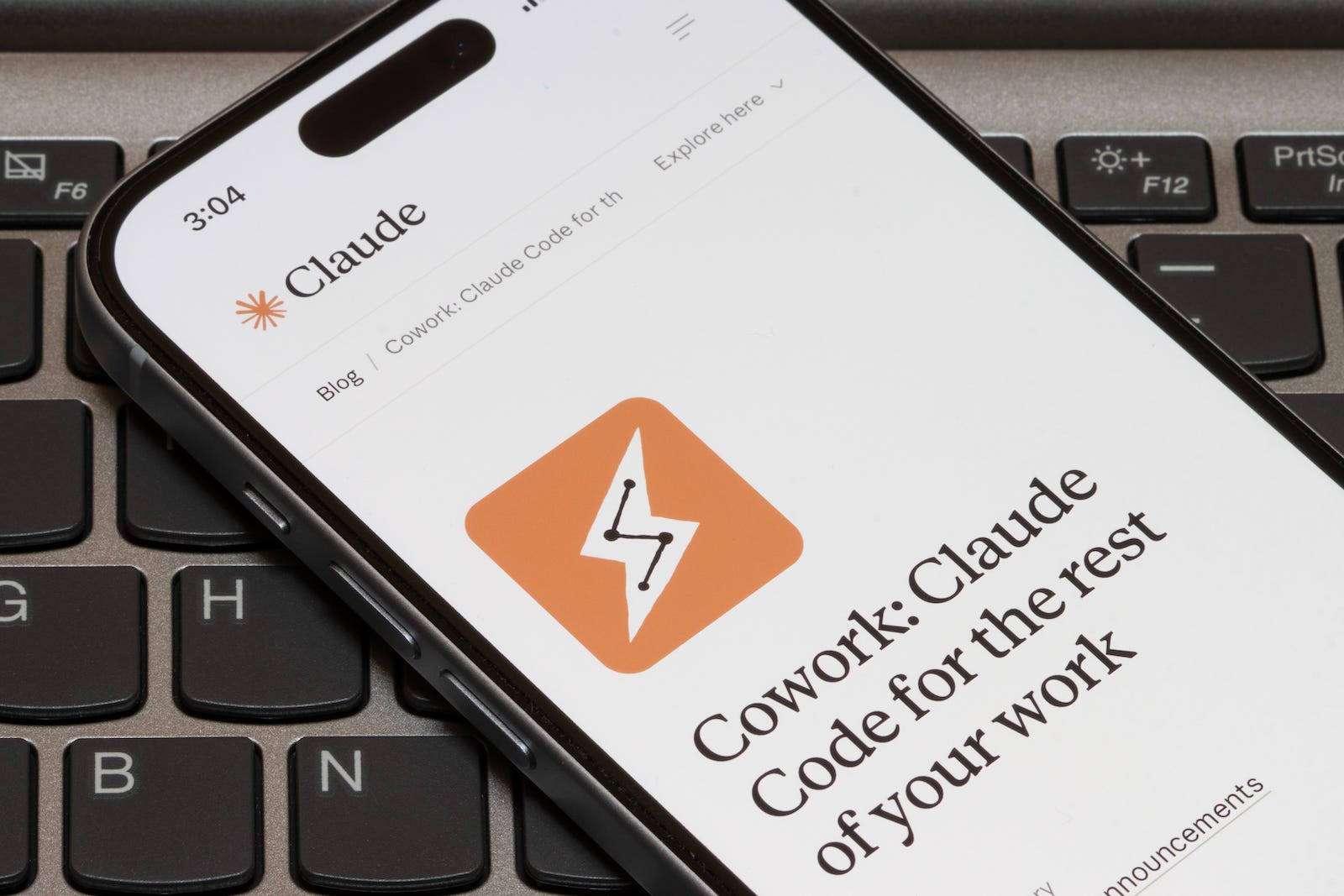
Anthropic has introduced a legal plugin for Claude, extending its agentic Cowork capability into legal workflows. The plugin allows users to review documents, flag risks, and track compliance directly inside Claude as part of Cowork, Anthropic’s system for executing multi-step tasks, rather than responding to single prompts.
Anthropic released the legal plugin alongside 10 other Cowork plugins and offers them as a research preview to paid Claude users. Cowork runs through the Claude Desktop app on macOS and can access local files that users choose to share, enabling the system to plan work, break it into subtasks, and deliver finished outputs to the user’s file system.
Here’s what matters:
The legal plugin moves Claude closer to day-to-day legal operations. Anthropic says the tool can review documents, flag risks, and track compliance, signaling an expansion from general-purpose assistance into functional legal and compliance work.
Anthropic designed Cowork to execute work, not just generate text. The system can analyze a requested outcome, coordinate multiple subtasks, and run extended workflows, positioning Claude as an agent that completes assignments rather than a chatbot that answers questions.
Anthropic set explicit limits on regulated use. The company advises users not to use Cowork for regulated workloads, noting that activity is not captured in audit logs, compliance APIs, or data exports, and that conversation history is stored locally on users’ machines.
Claude’s role inside legal technology continues to widen. Legal technology providers, including LexisNexis and Thomson Reuters, already deploy Claude as a large language model within their products, increasing its exposure across the legal sector.
For law firms, the release underscores the growing push toward agentic AI systems capable of executing legal work end to end. At the same time, Anthropic’s guardrails around compliance highlight the gap that remains between AI capability and enterprise-grade legal requirements.

New York Jury Awards $2 Million in Malpractice Case Over Gender Surgery: A New York jury awarded $2 million to a woman who sued her doctors over a double mastectomy she received as a minor, finding they failed to meet accepted medical standards and did not obtain informed consent. The verdict marks the first malpractice win against providers of gender-affirming care for minors, according to the report. The case centered on whether clinicians adequately evaluated the patient and communicated risks before approving surgery.
Families Sue Belize Resort and Travel Firms After Carbon Monoxide Deaths: The families of three Massachusetts women who were found dead at a Belize beach resort filed a $100 million wrongful-death lawsuit against the hotel and a travel agency, according to the New York Post. The complaint alleges the resort ignored prior guest warnings about carbon monoxide exposure and failed to install a working detector in the women’s room. The suit also names Expedia, claiming the platform listed the resort despite reviews, including on Expedia, describing symptoms consistent with carbon monoxide poisoning.
California Senate Passes Bill Regulating Lawyers’ Use of AI: The California Senate passed legislation requiring lawyers to verify the accuracy of court filings produced using artificial intelligence, including citations and factual assertions, according to Reuters. The bill would also bar arbitrators from delegating decision-making to generative AI and restrict reliance on AI-generated material outside the case record without disclosure. The measure now moves to the State Assembly.
Paperless Law Firm Sues Insurer Over Ransomware Losses: A Kansas personal injury firm sued its excess insurer, arguing the carrier wrongfully denied coverage after a ransomware attack shut down the firm’s digital operations for several days. The firm says its fully paperless practice could not access case files, software, or client records, causing lost business income covered under its cyber-risk policy. The insurer contends the firm did not suffer a compensable loss, a claim the lawsuit disputes.
States Move to Allow Civil Suits Against Federal Agents for Shootings: Lawmakers in multiple states are advancing bills that would allow civil lawsuits against federal law enforcement officers for alleged constitutional violations, seeking to close a long-standing accountability gap in U.S. law. Illinois has already passed such legislation, prompting a lawsuit from the Justice Department, while other states consider similar measures. The push follows fatal shootings involving federal agents and comes as courts have narrowed pathways for suing federal officers under existing law.


A federal jury has found Uber liable in a sexual assault case tied to one of its drivers. Last Thursday, a jury in Phoenix ordered Uber to pay $8.5 million to a passenger who said she was raped during a 2023 ride, rejecting the company’s long-standing argument that it is not responsible for the conduct of drivers it classifies as independent contractors, according to the New York Times.
The verdict came in a closely watched federal bellwether case. The lawsuit, brought by Jaylynn Dean, was designed to test Uber’s liability defenses ahead of more than 3,000 pending sexual assault and misconduct cases consolidated in federal court that accuse the company of systemic safety failures.
Jurors rejected Uber’s core liability defense but limited the damages. While Ms. Dean’s lawyers sought $144 million, the jury awarded $8.5 million and declined to impose heavier penalties, finding that Uber’s conduct did not meet the legal standard for being “outrageous, oppressive or intolerable,” the Times reported.
Evidence focused on Uber’s internal safety systems and decision-making. Jurors heard testimony that Uber’s systems flagged Ms. Dean’s ride as higher risk shortly before pickup without warning her, and reviewed internal documents suggesting the company resisted certain safety measures because of concerns they could slow growth.
Uber said the verdict affirms that it acted responsibly and plans to appeal, arguing the court gave incorrect instructions to the jury. While the ruling is not binding on other cases, it provides a real-world test of arguments that will now replay as individual cases move forward within the broader federal proceedings.

Laura Ramos James on Turning Community Trust Into Scalable Growth

Laura Ramos James did not build her firm by chasing every channel or copying what worked for larger shops. When a multimillion-dollar case landed just months after she opened her doors, she treated it as confirmation that her approach worked, not a signal to change it. Instead, she doubled down on the same community relationships and intentional decisions that brought the case to her in the first place.
Here’s what stood out from my conversation with Laura Ramos James, founder of Ramos James Law.
Early success should fund infrastructure, not lifestyle. Laura used her first major case to build capacity, not comfort. She invested in people and systems so the firm could handle more complex, life-changing cases rather than depending on one-off wins.
Community trust compounds when attorneys earn, not engineer, it. Laura did not treat community involvement as a marketing tactic. She showed up consistently in spaces she genuinely belonged to. That credibility produced referrals and relationships that scaled alongside the firm.
Hiring improves through iteration, not perfection. Laura described learning through missteps and refinements. She adjusted how she interviewed, what she screened for, and how she tested alignment. Over time, that process produced a team built to grow with the firm.
Delegation creates room for real leadership. Laura learned early that she could not scale while handling every operational task herself. By delegating administrative work, she freed time for litigation, mentorship, and firm strategy.
Serving underserved clients requires design, not intention. Laura built bilingual staffing and processes into the firm from the start. Spanish-speaking clients did not get partial access or workarounds. They received full representation at every stage.
“People can tell when you’re just showing up for a photo versus when you’re really there for them. Trust comes from consistency, not visibility.”
What stayed with me is how deliberately Laura tied growth to trust. Community presence created opportunities. Values shaped the team. Competence delivered results. None of those worked in isolation. Together, they allowed the firm to scale without losing its footing.
🎧 Personal Injury Mastermind: Episode 308 →


Rev Speeds Up Intake, Case Prep, and Demand Writing for PI Firms
We use Rev every week to produce the Personal Injury Mastermind podcast, so this is not a theoretical recommendation. Personal injury firms spend enormous time capturing facts, reviewing conversations, and turning spoken details into written case materials, and Rev sharply reduces that burden.
The platform records, transcribes, and organizes intake calls, depositions, and evidence so attorneys and staff stop replaying audio, scanning handwritten notes, or retyping conversations. Rev converts spoken information into structured, searchable case assets that firms can use immediately.
“What once required hours of manual review now takes minutes.”
Rev strengthens client intake when accuracy matters most. Firms record intake conversations through Rev’s secure mobile app or AI notetaker, then receive full transcripts and structured summaries built around a consistent intake framework. Crash details, injuries, insurance information, and personal background appear clearly organized instead of buried in notes. Teams share those summaries instantly, reduce intake errors, and move cases forward while details remain fresh.
Rev speeds demand letters and legal writing without sacrificing verification. Attorneys use Rev’s Insights feature to search transcripts and extract specific facts needed for demand letters, case narratives, and internal summaries. Each insight links directly back to the source in the transcript, which allows lawyers to confirm accuracy before drafting. That workflow shortens writing cycles while producing more complete, better-supported documents.
Deposition and evidence review no longer require hours of scrubbing. Firms upload deposition audio and video, search across spoken testimony, and jump directly to key moments instead of scrubbing through hours of recordings. Teams pull clips for witness preparation, internal strategy sessions, and focused review, which improves preparation while reducing staff hours spent on review.
Compliance stays intact without adding operational weight: The platform supports HIPAA-compliant handling of medical records and sensitive client data without requiring enterprise-scale teams. Firms gain secure access to advanced transcription and analysis tools that would otherwise remain out of reach.


As I see it, the biggest value of Rev is not just speed. The tool reduces administrative drag so attorneys spend less time listening to recordings over and over, retyping conversations, and second-guessing notes. For PI firms, that means faster intake decisions, stronger documentation, and more time focused on strategy, negotiation, and client advocacy.
Before you go
Disclaimer: Personal Injury Mastermind takes all reasonable steps to ensure accuracy in the materials we share, including articles, newsletters, and reports. These materials are intended for general informational purposes only and do not constitute legal advice. They may not reflect the most current laws or regulations. Always consult a qualified attorney for advice on a specific legal matter.


Thanks for reading. Quick ask…if you know someone who’d benefit from this content, please forward this to them. I’ll be back next week. - Chris
Received this newsletter from someone else? Subscribe below. Questions? Contact us at newsletters@rankings.io.