

PI Market Hits $61.7B, Why the Blog Is No Longer the Starting Point, and Advice for Legal Marketers from the Head of Instagram
Plus: How To Spend $100K, $1M, and $10M In PI Marketing

👋 Good morning. Chris Dreyer here. Some of the most consequential moves in mass tort litigation are happening outside the jury box, as appellate courts, expert reviews, and threshold rulings quietly determine which dockets move forward. From Tylenol and Roundup to talc and newer product categories now testing the courts, these decisions are shaping the mass tort landscape heading into 2026.
At the same time, the personal injury industry keeps getting more concentrated. IBISWorld estimates revenue reached $61.7 billion in 2025, yet competition remains intense with no single firm holding a market share exceeding 5%. I found that super interesting.
Also this week: I unpack why the law firm blog is no longer where discovery begins. Blogs still matter, but trust and familiarity are now being formed earlier, across feeds, platforms, and personalities, long before someone lands on a firm’s website.
(Fair warning: I didn’t plan for this newsletter to be “The James Helm Edition.” But here we are. 😁)
📆 [Webinar Replay]: Performance Marketing in 2026

Performance marketing for personal injury firms is entering a reset. In 2026, the firms that win will be the ones that understand how visibility actually turns into signed cases across search, AI answers, and paid media.
This webinar replay breaks down where real leverage is emerging, which signals are gaining weight, and what top-performing PI firms are doing differently right now—so you’re not playing catch-up this year.

Why the Personal Injury Blog Is No Longer the Starting Point

Many personal injury firms are still operating under an assumption that shaped the last decade of legal marketing:
If we publish enough blog posts, traffic will come.
For a long time, that assumption held up. Search reliably delivered visitors, and blogs functioned as a primary entry point for people trying to understand their options.
But this is not the Field Of Dreams, and that is no longer how discovery works. People are finding brands through other entry points (i.e. their favourite feed).
Instagram.
TikTok.
YouTube.
LinkedIn and X.
And in case you missed it: Substack.
Just this week, the Wall Street Journal described what many marketers have been experiencing firsthand: 2025 marked a turning point for newsletters, as writers, brands, and publishers shifted toward more direct relationships with their audiences.
So the point wasn’t that written content stopped working. Or that content marketing is no longer super important and a core driver of SEO—it is.
It was that the environment around it changed.
Let’s agree… law firm blogs were built for a version of the internet where clicks were currency. Newsletters, podcasts, and personality-led channels like TikTok are built for a version where trust and relationship are all that matter.
This is extremely relevant in personal injury…
Accident victims don’t move through information flows the way buyers of software or consumer products do. They’re not browsing casually or comparing features across ten tabs. They’re trying to reduce uncertainty and regain a sense of control after something disruptive happens.
They want reassurance.
They want clarity.
They want to hear from someone who feels credible and familiar and real.
And they want it right now.
And that, friends, is no longer happening via your company blog.
Because, just maybe, blogs aren’t human enough.
Anyway, this is the backdrop for why conversations about the “death of the company blog” remain relevant. I’m giving a nod to one post from growth powerhouse Elena Verna who documented how company blogs across even the largest, best-resourced organizations saw traffic stagnate or decline.
The point is…
Things. Have. Changed.
AI search increasingly resolves questions before a click happens.
Feeds and platforms shape opinions before research begins.
People arrive at websites later, not earlier.
As a result, blogs are less likely to be where interest starts and that could help explain a pattern many PI firms are seeing but struggle to articulate: large blog libraries that don’t translate into conversions. Content development supercharged by AI with no impact on search rankings. Traffic numbers that feel disconnected from case quality. Firms with far fewer posts but higher lead gen and conversion rates.
Contrast that with how James Helm approaches marketing at TopDog Law.
TopDog’s Instagram feed isn’t built around legal explanations or blog content in disguise. A lot of it is James being… himself. Short reels. Self-aware humor. Ordinary moments that make him feel approachable and human. So human that he even opens up in one clip about recovery from addiction and the discipline it took to rebuild his life and his career.
Helm is producing what Adam Mosseri, Head of Instagram, described in a 2,000 word essay on Threads last week as a “raw aesthetic” (more on this below).
By the time someone reaches the TopDog website, the blog isn’t introducing the firm for the first time. It’s providing context for a prospective client who already has a sense of who James Helm really is.
And this kind of trust-building isn’t limited to video…
As a relationship channel, podcasts also earn significant trust by giving prospects uninterrupted time with a single voice: yours.
Blogs, and the content that powers them, are still critical for SEO. But in 2026, this long-form content will sit later in the discovery process. Here’s Elena with a deeper dive:
🔗 Company blogs are no longer worth the investment →

Courts Set the Agenda for Mass Torts in 2026

A slate of major court decisions is lining up to shape the direction of mass tort litigation in the year ahead. Reuters reports that several of the largest and most consequential product liability dockets are approaching appellate rulings, expert reviews, or trial restarts, putting renewed focus on where claims may advance and where they may narrow.
Tylenol autism claims are back before an appeals court after a sweeping dismissal. A federal judge threw out hundreds of cases in 2024 after rejecting plaintiffs’ expert evidence, but appellate judges have since questioned whether that evidence was excluded too aggressively. The litigation has drawn additional attention amid public commentary and scrutiny surrounding a pending corporate transaction tied to the drug.
Roundup litigation is waiting on whether the Supreme Court steps in. Bayer is asking the Court to decide whether federal pesticide law preempts state-law failure-to-warn claims, an issue that could sharply limit or preserve a docket of roughly 65,000 cases. Even the decision on whether the Court hears the appeal will influence how long this litigation remains active.
Talc cases are moving back toward trial after years of delay. With Johnson & Johnson’s bankruptcy strategy exhausted, ovarian cancer claims tied to talc-based baby powder are expected to resume in state courts. In the federal proceedings, a special master is re-examining the scientific record, a process that will shape which claims move forward.
Newer categories are testing whether they can gain traction. Lawsuits involving GLP-1 weight-loss drugs continue to expand, with plaintiffs alleging severe gastrointestinal and vision-related side effects. At the same time, early cases against food companies over ultra-processed products, including a suit brought by the city of San Francisco, are probing whether courts will entertain broader public-health theories.
What stands out is how much of the action is happening outside the jury box. Appellate review, expert gatekeeping, and threshold legal questions are doing much of the work right now, quietly determining which mass torts remain viable before they ever reach trial calendars.
Personal Injury Market Hits $61.7B With No Dominant Players

The U.S. personal injury industry continues to grow, but consolidation remains elusive. IBISWorld estimates industry revenue reached $61.7 billion in 2025, reflecting steady growth driven by automobile accidents, medical malpractice, and increased travel activity. Despite that expansion, the market remains structurally fragmented.
No firm controls meaningful national share. The report counts more than 50,000 personal injury firms nationwide, with no single operator accounting for more than 5 percent of total revenue. The average firm employs roughly three people, reinforcing a competitive landscape dominated by small practices operating at local and regional levels.
Automobile accidents continue to anchor industry economics. IBISWorld identifies auto accident litigation as the largest revenue segment, supported by growth in the number of licensed drivers and sustained accident frequency. Medical malpractice is also expanding as the population aged 65 and older continues to rise, particularly in states with large retiree populations such as Florida and Texas.
A few signals worth watching:
Scale remains difficult to achieve. Decades of growth have not produced dominant national players, suggesting structural limits to consolidation rather than a lack of demand.
Growth has not reduced competition. Revenue is rising, but intense competition and rising wage costs continue to shape firm economics.
Geography still drives demand. Population density and demographic shifts remain central to where cases originate and where firms expand.
Taken together, these factors point to a market where visibility matters more than size. When scale is hard to achieve and competition remains local, firms that clearly communicate what they handle and where they operate are more likely to be discovered first. As demand continues to flow through local search, referrals, and increasingly AI-driven discovery, clarity of positioning becomes a competitive advantage rather than a branding exercise.

Google, Character.AI Agree to Settle Suits Tied to Minor Suicides: Google and Character Technologies reached agreements in principle to settle multiple lawsuits alleging their Character.AI chatbot caused psychological harm to children, including cases involving the suicides of minors, according to court filings and company disclosures. The suits, filed in federal courts across several states, allege the chatbot encouraged self-harm and exposed minors to inappropriate content; the companies have denied wrongdoing. Terms of the settlements were not disclosed, and the agreements are expected to take months to finalize.
Social media addiction lawsuits move closer to trial: A U.S. appeals court appeared skeptical of Meta and other platforms’ effort to halt more than 2,200 lawsuits alleging their products were designed to be addictive for young users, questioning whether broad immunity under Section 230 applies at this stage. The cases, brought by states, school districts, municipalities and individuals, are centralized in federal court in California and seek damages, penalties and restitution tied to alleged youth mental health harms. The ruling signals growing judicial willingness to let platform design and product-liability theories proceed, reinforcing earlier warnings that 2026 could become a defining year for mass litigation tied to technology-driven harm.
New Jersey Spa Agrees to $6 Million Wrongful Death Settlement: A New Jersey spa agreed to pay $6 million to resolve a wrongful death lawsuit after a patron drowned in a hot tub at its Edison facility. The case centered on routine safety lapses, including alleged failures to monitor patrons, follow internal protocols, and maintain emergency equipment. The claims involved ordinary operational conditions rather than unusual conduct or disputed liability theories. The settlement was reached without trial, resolving allegations tied to basic supervision and equipment oversight failures.
OpenAI Hit With Second Lawsuit Tied to ChatGPT and Murder-Suicide: A second lawsuit filed in California federal court alleges that design and safety failures in OpenAI’s ChatGPT contributed to an August 2025 murder-suicide in Connecticut, according to the complaint. The Soelberg estate claims the GPT-4o model reinforced delusional beliefs and that OpenAI rushed the product to market while bypassing internal safety protocols. The filing follows a similar action brought by the victim’s estate and centers on product design decisions and deployment practices rather than isolated user behavior. The case adds to growing scrutiny of how AI systems handle foreseeable risks tied to user mental health.
Michigan City to Pay $3.25M After Woman Was Mistakenly Declared Dead: A Detroit-area suburb agreed to pay $3.25 million to settle a lawsuit stemming from a 2020 emergency response in which a physician pronounced a 20-year-old woman dead by phone based on paramedic reports. The case centered on protocol-driven decision-making and breakdowns in emergency verification during a medical crisis. The woman was later found alive at a funeral home but died weeks later after suffering severe hypoxic brain damage. The settlement resolved claims tied to systemic failures in emergency response procedures rather than disputed medical judgment.
Widely Cited Glyphosate Safety Study Withdrawn After Ethics Concerns: A scientific journal has withdrawn a 2000 review long relied on to support the safety of glyphosate, citing concerns over author independence and undisclosed industry involvement. The retraction followed litigation disclosures showing Monsanto scientists played a role in drafting and reviewing the paper, which relied heavily on unpublished company studies. The move undermines a key evidentiary pillar in Roundup litigation as regulators approach a 2026 reassessment deadline. Bayer, which acquired Monsanto in 2018, has paid more than $10 billion to resolve roughly 100,000 related claims.
Law Firms Continue to Appoint Executives to Run AI Strategy: Large U.S. law firms continue to hire senior executives to oversee artificial intelligence as they look to sharpen their competitive position, Reuters reports. The roles are focused on coordinating how AI tools are used across legal work, from research and drafting to internal operations, as firms look for ways to increase efficiency and keep pace with peers. Recruiters cited in the report say demand for AI leadership has grown as firms move beyond experimentation and look for centralized oversight.


That’s roughly how many words from any single page Google’s AI systems are likely to use when generating an answer. Research published in December by SEO researcher Dejan Mirkovic shows that AI-driven search pulls from a narrow slice of each source, no matter how long the original page is.
AI search works with a fixed reading limit. Mirkovic’s analysis shows Google’s AI systems operate within a capped context window. Once a page contributes roughly 400 to 600 words, additional content is ignored. Longer pages do not earn more exposure. They are simply cut down to size.
Longer pages lose relevance faster than most firms realize. Shorter pages may see a large share of their content used. As pages stretch into the thousands of words, the percentage that survives drops sharply, even though the absolute number of words pulled stays about the same.
Only the most direct, relevant language makes it through. Clear explanations tied tightly to the question get used. Navigation, filler, hedging, and generic marketing copy are typically stripped out before the AI assembles its answer.
Here’s what this means for personal injury firms.
AI tools are increasingly the first stop for people trying to understand what to do after an injury and who can help. When someone asks about a truck crash, a wrongful death, or a serious injury claim, the system isn’t reviewing your entire website. It’s stitching together answers from small blocks of text.
If you only get 500 words, those words have to do real work.
They need to explain, in plain language, what you do, which cases you handle, and why you’re relevant to that specific problem. Long practice-area pages that wander or try to cover everything often get compressed into something that says very little.
This doesn’t mean long-form content is useless; that still matters for human readers. But AI visibility now depends on whether your most important explanations can stand on their own when pulled out of context.
The firms that show up will be the ones that stop assuming everything on the page gets read; the folks who are intentional about what matters most to prospects.

How To Spend $100K, $1M, and $10M In PI Marketing
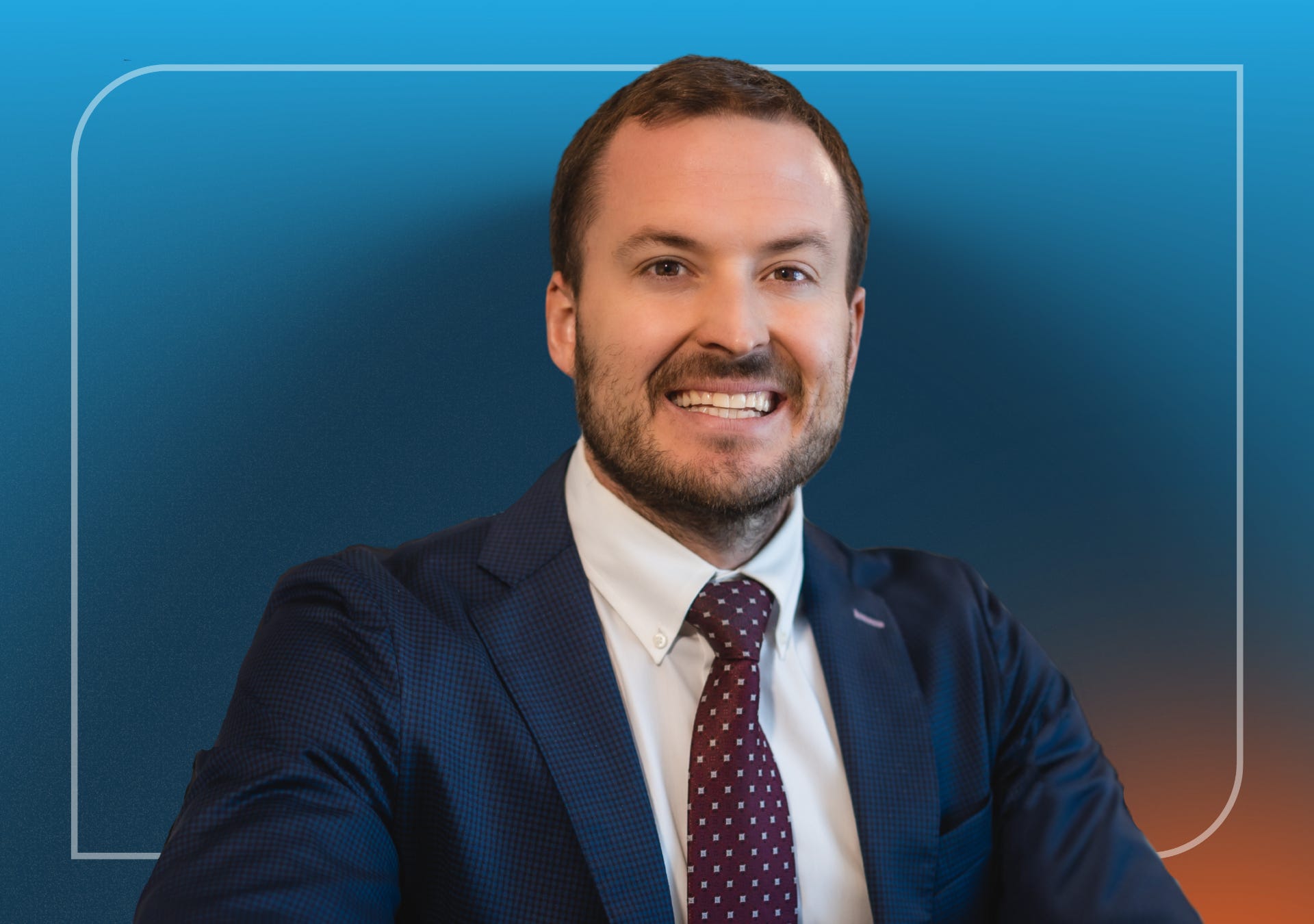
When firms talk about marketing, they usually focus on channels. James Helm, the founder and CEO of TopDog Law, focuses on timing. In this episode, he explains how the same tactics can either work or fail depending on where a firm is in its growth cycle, and why spending ahead of readiness is how budgets quietly disappear.
“Most firms don’t have a marketing problem. They have an intake problem.”
At $100,000, the work is about tightening the basics. Helm says firms should commit to one primary channel, answer the phone consistently, and trace signed cases back to a clear source. Small budgets get wasted when firms try to look bigger than they are instead of fixing intake and attribution.
At $1 million, volume starts exposing internal weaknesses. Helm describes firms generating demand faster than their teams can handle it. Calls go unanswered. Follow-up slows. Marketing looks like the problem, but the real issue is capacity. Without staffing and workflows keeping pace, more spend just creates friction.
At $10 million, firms start deciding which dollars are meant to drive calls now and which are meant to build recognition over time. Helm talks about separating spend that is expected to produce cases this quarter from spend aimed at being the firm people already know when something goes wrong. The mistakes here tend to come from expanding too fast or spending without clear expectations.
Across all three stages, the constraint isn’t budget. It’s whether intake, staffing, and case flow can support the spend. Here’s my full conversation with James.
🎧 Personal Injury Mastermind: Episode 342 →


Instagram: How PI Firms Can Capitalise in 2026
Head of Instagram Adam Mosseri just called it…
“Creators matter more.”
Instagram, he wrote, is intentionally moving away from polished, highly produced content and toward what he described as a “raw aesthetic,” material that feels native to the platform and clearly coming from a real person—not AI.
For personal injury firms, that direction is relevant in terms your 2026 content strategy:
Instagram is elevating content tied to an identifiable individual. Mosseri said the platform is designed to surface posts that feel first-hand and human, rather than content that looks designed or promotional. Lawyer-led posts where the attorney is visibly present align more closely with that approach than firm-branded graphics or repurposed marketing assets.
Highly produced formats are being deprioritised. Mosseri noted that content which appears overly edited or engineered is less likely to perform well. Static visuals, templated videos, and posts designed to resemble marketing materials are less aligned with how Instagram now evaluates relevance.
Consistency and recognizability matter more than polish. The emphasis Mosseri outlined is on showing up in a way that is easy to understand over time. The platform rewards clarity of voice and authorship rather than volume or visual sophistication.

It’s a clear shift that fits within a broader media pattern that Brian Morrissey described as Peak Individual in a recent interview, where attention concentrates around people rather than organisations. What happens next is still forming, but platforms like Instagram are making clear that individual presence remains central to how visibility is allocated.
🔗 Adam Mosseri on Instagram’s “raw aesthetic” →
Before you go
Disclaimer: Personal Injury Mastermind takes all reasonable steps to ensure accuracy in the materials we share, including articles, newsletters, and reports. These materials are intended for general informational purposes only and do not constitute legal advice. They may not reflect the most current laws or regulations. Always consult a qualified attorney for advice on a specific legal matter.


Thanks for reading. Quick ask…if you know someone who’d benefit from this content, please forward this to them. I’ll be back next week. - Chris
Received this newsletter from someone else? Subscribe below. Questions? Contact us at newsletters@rankings.io.