

Trucking Liability Fight Escalates, AI Confidence Falls, and One Underrated Tactic to Win More Cases
Plus: The 60-Day Settlement System That Turns $300K Cases Into Million-Dollar Outcomes

👋 Good morning. Chris Dreyer here. Florida’s effort to hold two states responsible for commercial driver licensing decisions tied to a fatal trucking crash is moving into new territory. The petition raises questions about how federal CDL rules are enforced and how those gaps may shape future trucking litigation.
Meanwhile, a new PwC survey shows a sharp turn in expectations around AI. Law firms report falling confidence in its impact on revenue and margins. Legal departments say they are seeing the strongest productivity gains yet. The divide is growing, and it is already influencing how work gets handled.
Also today: I explore an underrated tactic that gives firms a sharper message, stronger positioning, and a clearer path to the cases they want most. Let’s dive in…

PIM Newsletter is brought to you by Rankings.io, the law firm growth agency helping PI firms dominate AI search and turn visibility into cases. Learn more →

An Underrated Tactic to Win More Cases

The victims who call your firm after an accident don’t know how the legal world works. They don’t know insurers now use AI to avoid huge payouts. They don’t know how evidence disappears. They don’t know which mistakes cost them leverage. They’re just trying to make sense of a moment that feels chaotic. And most personal injury websites meet that moment with generic sameness.
Here’s a better way to communicate your firm’s value: instead of talking about yourself, tell a powerful story about change. A change in the world of injury law that victims need your help to navigate if they want their cases settled favourably. A shift from the old game to the new game and how your firm can help victims win this new game.
This kind of storytelling is called strategic narrative. It pulls your entire strategy into one coherent story you can use again and again to drive success. It turns your marketing into something clients can feel. Something your entire team can learn and repeat consistently. Something referral partners can share without guessing. Think about it this way…
If advertising gets you noticed, strategic narrative explains why you are the right choice.
You might be surprised how much this simple narrative technique can influence case growth.
Strategic narrative in personal injury
Andy Raskin is a strategic narrative consultant whose clients include brands like Salesforce and Uber. Years ago, he developed a framework that breaks strategic narrative into simple pieces. Here’s that framework applied to personal injury law:
Identify a change or shift in the PI world that directly impacts victims
In your marketing copy, warn about the stakes of ignoring this change (victims who ignore your advice lose)
Describe the future outcome your firm can achieve for victims (Raskin calls this future state The Promised Land)
Identify the obstacles in their way and position your firm’s unique strengths as the magic ingredients needed to help victims overcome these obstacles (client is the hero, firm is the guide)
Show you have a track record of helping other injury victims win
Notice how that reads like the setup for Star Wars? A strategic narrative builds on the hero’s journey and gives you the language to explain how your firm helps victims across every touchpoint:
Your homepage headline
Your intake scripts
Your press releases
Your video scripts
Your billboards and social ads
Your follow-up emails
Your courtroom summaries
Your referral partner kits
Once your firm’s narrative is clear, people stop asking, “Why should I choose this law firm?”
…because they already know the answer.
Your story has done the work.
In personal injury, your prospective clients don’t just want a settlement. They want:
clarity
stability
accountability
a path back to normal life
Strategic narrative is a great way to help them move from confusion to clarity. It’s the thread that ties your homepage, your videos, your email sequences, your intake scripts, and advertising into one high-impact message that builds trust and reputation.
Just remember to give people a story worth repeating. 🔥
🔗 The Making of a Great Strategic Narrative →

Florida Pushes Supreme Court To Weigh State Liability In Trucking
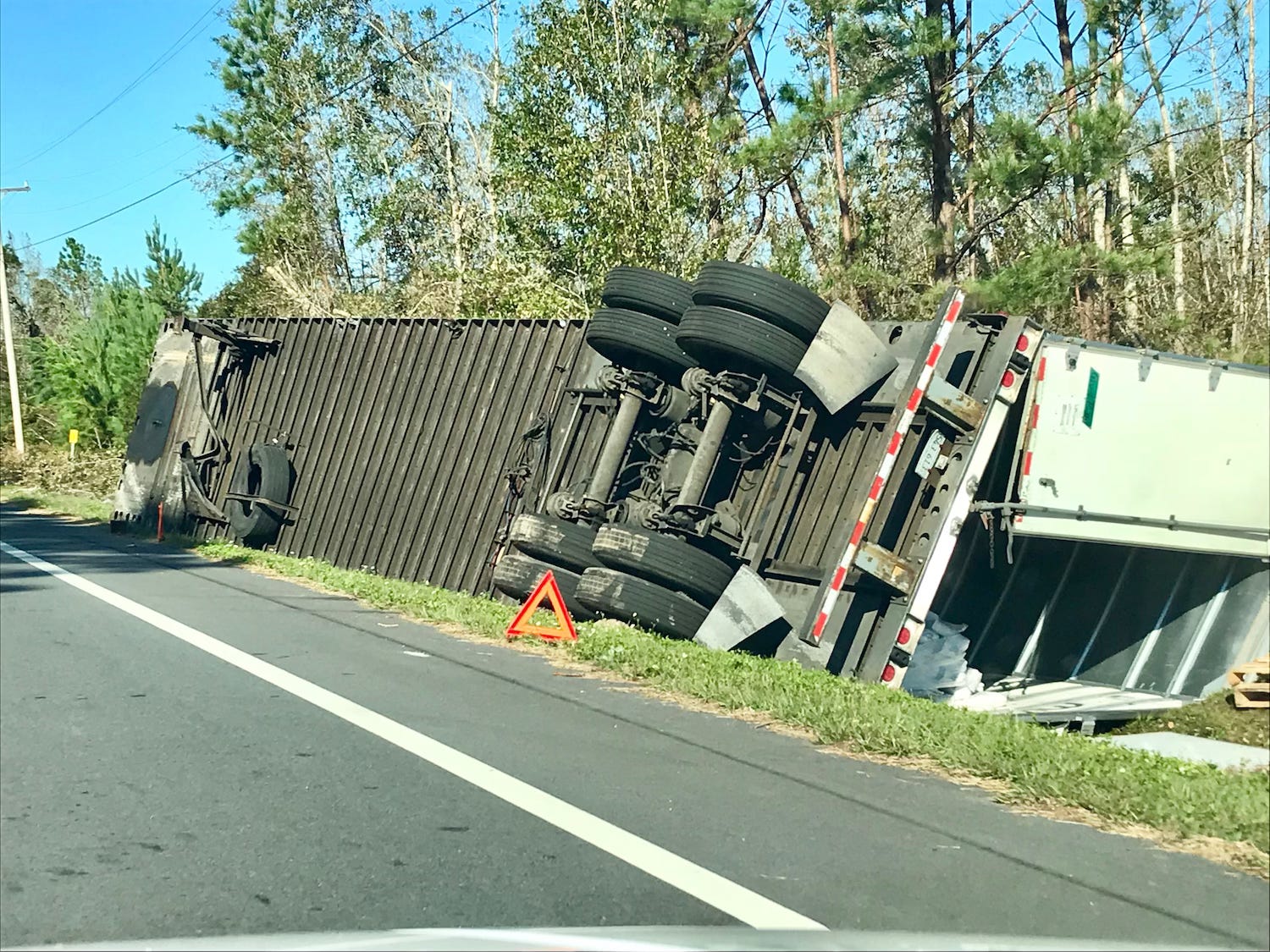
Florida is asking the Supreme Court to let it sue California and Washington over commercial driver licensing practices tied to a fatal St. Lucie County crash. The petition argues that both states issued credentials to a driver who did not meet federal English language requirements, allowing him to operate in Florida where the collision killed three people.
Florida points to uneven enforcement of federal safety rules. The driver held commercial licenses from both states, but Florida contends he was not qualified under FMCSA regulations. Federal data shows that about 6,000 drivers nationwide were taken out of service for English language proficiency violations after stricter guidance, while California recorded one such violation across roughly 34,000 inspections.
A recent Law360 analysis says Florida’s filing transforms a routine wrongful death case into a novel constitutional challenge. The authors argue that Florida is testing whether states can face tort-style consequences for policy decisions that allegedly create safety risks beyond their borders, invoking theories of policy-based public nuisance and implied federal preemption.
If the Court takes the case, the ruling could clarify how federal CDL standards interact with state licensing authority. The authors note that even the act of filing signals growing scrutiny of how differences in state CDL systems affect carriers, regulators, and litigators in interstate trucking matters.
Enforcement gaps in CDL requirements. The authors highlight Florida’s reliance on inspection data to argue that inconsistent enforcement of English language and eligibility rules may allow underqualified drivers to obtain licenses in one state and operate nationwide. These disparities could draw renewed attention from regulators and litigators.
Discovery on hiring and safety protocols. The analysis suggests the case may prompt deeper inquiries into how carriers verify qualifications beyond the license itself. Plaintiffs may explore whether carriers relied on state-issued credentials from jurisdictions viewed as less rigorous, potentially broadening discovery into training and safety practices.
State-level liability exposure. The piece frames the petition as an attempt to test whether a state’s licensing and enforcement policies can play a greater role in liability arguments when crashes occur across borders. Even without a ruling, the filing heightens attention on how state regulatory differences shape litigation strategy.
Why it matters for PI firms: The case signals expanding paths for discovery tied to driver qualifications, state licensing gaps, and carrier oversight. A stronger federal floor for CDL standards or a new liability framework for state-issued licenses could shift how firms evaluate trucking claims and position negligent hiring theories.
Law Firm Confidence in AI Collapses While Legal Departments See Rising Impact

Law firm confidence in AI is collapsing just as legal departments report rising impact. A new PwC survey shows a sharp reversal in expectations, with firms anticipating margin pressure while clients report the largest year-on-year jump in expected operational benefit. The result is a widening gap in how each side sees AI reshaping legal work.
Firm optimism has flipped into concern. In 2023, 69 percent of firms expected AI to lift revenue and margins, but by 2025 that figure fell to 31 percent, with two-thirds now anticipating negative impact. Firms told PwC they expect clients to automate more early-stage work, increasing transparency around efficiency gains and intensifying downward pressure on rates.
Legal departments are moving in the opposite direction. Corporate teams recorded a 24-point rise in perceived high impact from AI, the largest increase in the survey. Many expect automation to expand self-service capability and reduce dependence on external counsel, narrowing the scope of work they outsource.
Hours compression is accelerating. Expected reductions in chargeable time have climbed from 11 percent to 16 percent year over year, and half of Top 10 firms report productivity or financial gains from AI. None of the Top 51–100 firms have monetised their tools, and half of firms ranked 11–25 fear clients will adopt similar AI platforms, reducing future demand.
A few dynamics stand out:
Firms vs. legal departments. The gap in expectations is widening quickly. Firms are bracing for margin pressure, while clients see AI as a way to handle more routine work in-house.
Pricing pressure rises. As automation exposes how little time certain tasks now require, firms expect tougher conversations on scope and fees. Some large practices are already shifting toward fixed-fee models to stay aligned with client expectations.
Chargeable-hour compression expands. Firms are projecting sharper declines in billable time as AI absorbs research, drafting, and administrative steps that traditionally anchored junior workflow. The change is forcing leadership teams to rethink staffing, leverage, and what productivity should mean in an AI-enabled practice.
What this means for your PI practice: AI’s impact on revenue will be structural, not tied to time spent like other practice areas. As legal work accelerates, clients will expect their cases to move faster. Firms that apply AI to tighten workflows, speed up preparation, and build stronger demands will produce better results and pull ahead of practices that still use manual processes.

Blackstone invests $50 million in AI-native legal services: The new round lifts Norm Ai’s total funding above $140 million and supports the launch of Norm Law LLP, an independent New York firm built to deliver legal work through the company’s automation platform. The investment reflects growing institutional confidence in AI models designed to automate dense regulatory reviews and accelerate compliance workflows.
Solicitor General backs Bayer in Roundup preemption fight: The government urged the Supreme Court to overturn a $1.2 million failure-to-warn verdict, arguing that FIFRA bars states from imposing labeling duties beyond what EPA requires. The brief highlights a split between the Third, Ninth and Eleventh Circuits and says the Missouri appellate court erred in allowing the claim to stand. A ruling narrowing state-law labeling theories could tighten the path for toxic-exposure suits tied to federally regulated products.
AI liability questions move closer to the courtroom. OpenAI’s answer in a wrongful-death suit rejects claims that ChatGPT contributed to a California teen’s suicide, pointing instead to documented mental-health history and repeated safety-guard interventions. The filing also concedes the case cannot be dismissed early on arbitration or Section 230 grounds, meaning discovery will test how courts treat guardrails, foreseeability, and user attempts to bypass safety systems.
New Jersey jury delivers $15.5 million TBI verdict despite plaintiff’s recovery: A Hunterdon County jury found Diaco Construction 90 percent liable after debris from a feller buncher struck electrician’s helper Kyle Lauck, causing mandible and cervical fractures and a severe traumatic brain injury. The case underscores that visible “recovery” carries limited weight when cognitive deficits are well-documented, even when plaintiffs return to full-time work, marry, or start a family. Partial settlements with other contractors brought Lauck’s total recovery to more than $16.1 million, reinforcing the exposure contractors face when traffic-control duties break down and subcontractor oversight is thin.
Judge trims a deepfake verdict after full liability finding: A Florida federal jury awarded Megan Thee Stallion $75,000 after finding blogger Milagro Cooper liable for defamation per se, emotional distress and distributing a deepfake porn video, but the court later cut the award to $59,000 after ruling that Cooper qualified as a media defendant who had not received the required pre-suit notice under Florida law. The jury found Cooper acted in a media capacity while spreading misinformation during Tory Lanez’s criminal trial, but was not impartial in her reporting.
Fastcase Sues Alexi Over Alleged Data Misuse: Fastcase, now owned by Clio, filed a federal suit claiming the AI startup Alexi violated a 2021 licensing deal by using its legal database to build commercial products and distribute Fastcase-sourced case law. The complaint also alleges trademark infringement and trade secret misappropriation, setting up a test of how legacy research platforms will enforce data rights as AI vendors scale. Alexi denies wrongdoing, calling the dispute a misunderstanding timed to Clio’s recent vLex acquisition.
Marshalls Wins Appeal Over Customer’s Fall at Palos Verdes Store. A California appellate panel upheld summary judgment after finding the shopper stepped backward into a 5-inch furniture platform without looking, defeating causation and reinforcing the retailer’s open-and-obvious defense. The court said warnings or color contrast would not have changed the outcome because the plaintiff admitted she never looked behind her, highlighting the evidentiary hurdles PI plaintiffs face when stationary hazards are visible and plaintiff conduct drives the incident.


Harvey, a domain-specific AI assistant for elite law firms, reached an $8 billion valuation after closing a $160 million funding round, more than doubling its valuation since February and bringing total capital raised this year to roughly $760 million. The deal marks one of the largest investments in the legal-AI sector to date as adoption accelerates across major law firms and corporate legal departments.
Adoption continues to expand. About half of Am Law 100 firms now use Harvey’s platform, alongside enterprises such as Comcast, Bridgewater and Repsol, reflecting broader integration of AI tools in legal and compliance work.
Revenue growth reinforces investor confidence. Annual recurring revenue has surpassed $150 million, tripling since the start of the year, as backers including Andreessen Horowitz, T. Rowe Price, Sequoia and Kleiner Perkins position Harvey against rivals like Legora, Luminance and CoCounsel.

The 60-Day Settlement System That Turns $300K Cases Into Million-Dollar Outcomes

The defense attorney from Pittsburgh couldn’t believe what he was seeing. Jon Hollan, just 29 and newly engaged, was up against FedEx, one of the most defended companies in America. After months of depositions and expert testimony stretching from Harvard to Montana, the defense finally folded. The case settled on New Year’s Day 2018, while Hollan was on his honeymoon in Buenos Aires.
Since then, Hollan, a trial attorney, has recovered over $100 million for clients at Sam Aguiar Injury Lawyers, where they handle 100+ cases monthly with a team of 10+ attorneys and 45 staff. But his biggest breakthrough wasn’t a trial technique.
It was realizing that speed beats volume in personal injury practice.
Most firms measure success by how many files they can carry. Hollan rebuilt his system around how quickly and precisely he could move each case from intake to settlement. Every case at Sam Aguiar Injury Lawyers now begins with a structured audit before any work starts. A managing attorney writes a case overview, assigns roles, and sets priorities so the team executes with precision.
Fewer cases, deeper work. Each file is handled by a three-person pod — an attorney, case manager, and legal assistant — who maintain direct client access and communicate every two weeks without fail.
The case planning protocol. Before any team member touches a case, the managing attorney completes an initial audit in Litify, documents a case overview, and assigns specific tasks based on case type. This diagnosis-before-execution approach eliminates wasted motion and accelerates resolution timelines.
Preparation replaced pressure. The result is a firm that routinely settles auto cases in 30 to 60 days, turning what used to be midrange claims into seven-figure outcomes. The system has also changed how younger attorneys work: they train on high-value cases alongside senior lawyers and see firsthand how methodical planning compounds results.
“Rather than what might be a $200,000 to $300,000 case, we’re turning those routinely into $700,000 to million-dollar cases. Same exact case, we’re not really doing a lot different.”
The lesson: growth doesn’t come from doing more cases; it comes from doing them better.
🎧 Personal Injury Mastermind: Ep 355 →


EvenUp Introduces Real-Time Medical Management and AI Client Check-Ins for PI Firms
EvenUp recently announced a new Medical Management for PI firms. The system is designed to enable real-time visibility into client treatment and reduce the case-value losses tied to missed or delayed care. The release includes an interactive medical timeline and the first in a suite of AI Communication Agents built to keep firms updated through continuous client outreach.
EvenUp is targeting one of the biggest hidden drains on PI case value: treatment gaps. The company’s data shows that nearly one-third of plaintiffs experience a 30-day interruption in care within six months, often weakening credibility and slowing case progress. Its new Medical Management system gives firms real-time visibility into each client’s treatment path and introduces AI agents to keep communication consistent and timely.
The system gives case managers a live treatment picture. Within an hour of record upload, firms can see an interactive timeline of visits, upcoming care, missed appointments, and high-value procedures such as MRIs, injections, and surgeries. That early detection matters: Law.com notes that case managers often juggle more than 100 active files, making routine check-ins nearly impossible at scale. EvenUp’s tool verifies client updates against medical records and flags missing bills or gaps before they become problems.
AI Communication Agents take on the outreach burden. The first agent conducts multilingual SMS and voice check-ins to learn whether a client missed care, why it happened, and what support is needed. Summaries go back to case managers so human follow-up goes exactly where it is needed. Additional agents — including balance verification, liability and coverage checks, and claim opening — are already in testing and set for release.
The big picture: EvenUp is positioning PI medical oversight as a real-time discipline rather than a retrospective one. With what it calls the industry’s largest PI dataset, the company says firms can now prevent avoidable gaps, protect case value, and redirect attorney time toward strategy instead of manual tracking.
Before you go
Disclaimer: Personal Injury Mastermind takes all reasonable steps to ensure accuracy in the materials we share, including articles, newsletters, and reports. These materials are intended for general informational purposes only and do not constitute legal advice. They may not reflect the most current laws or regulations. Always consult a qualified attorney for advice on a specific legal matter.


Thanks for reading. Quick ask…if you know someone who’d benefit from this content, please forward this to them. I’ll be back next week. - Chris
Received this newsletter from someone else? Subscribe below. Questions? Contact us at newsletters@rankings.io.