

AI Pressures the Billable Hour, Courts Confront a Wave of AI Errors, and How PI Firms Can Stand Out By Naming Their Niche
Plus: The Mac, the Mentor, and the $200M Case That Built a PI Practice

👋 Good morning. Chris Dreyer here. The way AI is reshaping legal work is becoming harder to ignore, and a Harvard study on productivity inside major law firms helps explain why. The gains are real, the pace is accelerating, and the billable hour is starting to feel the strain.
Also today: courts are confronting a rising wave of AI errors in legal filings, and the implications for credibility are significant. And in a different lane, I share an insight on category design that has shaped how I think about growth at Rankings.io and why it matters for PI firms in crowded markets.
And later, I share a conversation with Parag Amin, whose approach to systems and discipline shaped the growth of his PI practice. It is a useful reminder that even as the industry changes, fundamentals still drive results.

PIM Newsletter is brought to you by Rankings.io, the law firm growth agency helping PI firms dominate AI search and turn visibility into cases. Learn more →

How Naming Your Niche Helps PI Firms Stand Out in a Crowded Market

I’ve been thinking a lot about why some PI firms grow faster than others. The team over at Category Pirates (super cool newsletter btw) has a concept called “languaging,” which is the discipline of choosing the words that define the problem you want to own.
That idea really clicked for me because the PI firms that dominate trucking, birth injury, rideshare, or medical negligence did not get there by accident (pardon the pun). They built clear language around the type of cases they wanted, and the market began to associate those cases with them. In a competitive field like personal injury, that clarity matters. A few thoughts from the Category Pirates piece stood out.
A point of view comes before the marketing. Messaging is broad and interchangeable; languaging is naming the specific problem you solve in a way people immediately understand. The article highlights how often businesses use vague lines that sound good but say nothing meaningful.
Naming the problem creates the category. Salesforce popularized “cloud-based software.” Netflix reframed “appointment viewing.” Starbucks normalized “Grande.” A few intentional words shifted how entire industries understood the value being offered.
When the language spreads, demand follows. Once people adopt the words you introduced, they begin thinking about the category through your framing. McKinsey’s internal vocabulary of “engagements” and “practices” eventually became the language clients used to describe consulting work.
You see this every day in personal injury. The firms that grow consistently are the ones that define a specific niche and make it easy for clients, referral partners, and AI systems to understand exactly what they do.
This Local Law Firm SEO in the AI Era ebook makes the same point from a different perspective. It explains that large language models rely on clear, consistent signals about a firm’s identity, and that “the firm that is easiest for AIs to understand gets suggested first.” When a firm names its niche and uses that language consistently, AI tools begin matching that firm with the cases it wants most.
It’s not branding. It’s category design, and it has become one of the clearest ways to stand out in a crowded PI market.

AI Reshapes Legal Work Faster Than the Billable Hour Can Adapt

AI is reshaping the economics of legal work faster than firms can update their pricing models. A study from the Harvard Law School Center on the Legal Profession shows that AmLaw 100 firms are seeing dramatic productivity gains from AI deployments, in some cases cutting work once measured in hours down to minutes. But those gains clash directly with the billable hour model, which still anchors most fee arrangements across the legal industry and is especially entrenched in large firms where it accounts for roughly 80 percent of AmLaw 100 revenue.
The tension around time-based billing is not new. Last year, the Wall Street Journal reported that hourly rates at top firms climbed as high as $2,500 an hour, with general counsels calling the increases “not sustainable” and pushing harder for alternative fee arrangements.
A separate benchmark of industry performance, the annual Legal Trends Report published by Clio, adds more context. The report analyzes aggregated, anonymized data from thousands of law firms across the United States, offering one of the clearest views of how technology affects real-world legal workflows. Its latest edition found that lawyers using AI completed 12 percent more work, 25 percent faster, and with 40 percent higher quality, creating an even wider gap between time spent and value delivered.
Interviews with COOs and partners across ten major firms echo this: productivity is rising, and clients expect higher-quality work delivered faster. The paradox is that the billable hour rewards time rather than efficiency. “We are trying to flip the 80-20,” one senior leader told Harvard, shifting lawyers away from document collection and toward strategy. AI makes that possible but highlights the structural tension between technological acceleration and time-based billing.
The friction is becoming more visible:
AI is flattening professional services models. Generative AI compresses value chains and enables leaner firms to orchestrate networks of AI agents rather than staffing large teams. Traditional labor-heavy structures may feel pressure as these models spread.
AI reduces hours faster than firms can revise compensation systems. Ignition Consulting Group estimates that AI already cuts 20 to 30 percent of delivery time, with far larger declines ahead. Sam Altman predicts that “95 percent of what agencies do today will be done better and faster by AI.”
Clients are paying attention. Many are not demanding lower bills yet, but increasingly want clarity on how AI affects confidentiality, accuracy, and speed.
The standard business model is under stress. Stanford Law researchers found that three quarters of hourly billable tasks have high potential for automation, from document review to research. That puts firms in a bind. Using AI improves quality and speed but reduces billable hours. Avoiding AI altogether might mean falling behind.
“AI is a catalyst for conversations about our business model that we would not have had without it,” one AmLaw COO told Harvard.
The Legal Trends Report also notes that firms relying heavily on hourly billing experience the greatest conflict between productivity gains and revenue targets. Firms using flat fees or value-based pricing see stronger growth, and 59 percent now rely on fixed fees exclusively or in combination with hourly rates.
For PI firms, the takeaway is less about speeding up tasks and more about redefining value. If AI continues to compress the time required to produce high quality legal work, then time can no longer represent what that work is worth. PI firms already operate on outcomes rather than hours, and this shift reinforces that trend across the industry. As Ignition’s Tim Williams argues, firms that understand and communicate their differentiated value will compete more effectively than those still thinking in units of time.
🔗 Center on the Legal Profession →
AI Missteps in Court Filings Accelerate as Global Tracking Efforts Expand
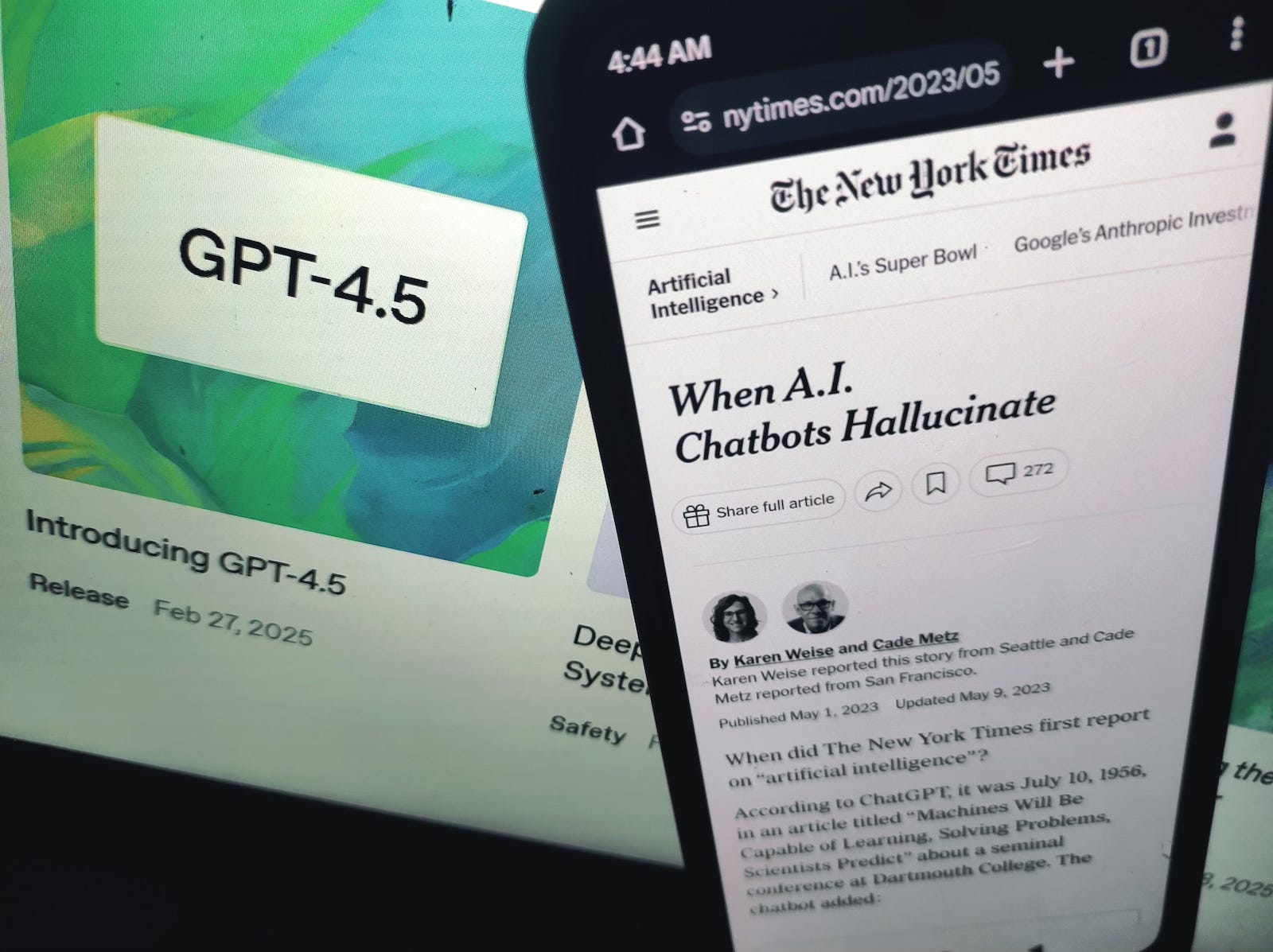
Courts are seeing a sharp rise in AI-generated errors in legal filings. The New York Times reports that lawyers in multiple jurisdictions have submitted briefs containing nonexistent cases, fabricated quotes, and hallucinated citations generated by chatbots. In one Texas bankruptcy matter, an attorney cited 32 invented authorities, prompting sanctions and required AI training.
A global database now tracks AI hallucinations in court decisions. Damien Charlotin’s AI Hallucination Cases project compiles rulings that involve fabricated citations or misrepresented law, with entries spanning the United States, Canada, Europe, South America, and the Caribbean. The database, cited in the Times, has logged more than 560 cases worldwide and documents several new incidents each day.
Sanctions are increasing as licensed attorneys join the misuse trend. A related report describes a lawyer sanctioned in New York state court for submitting fake AI citations and then doubling down by relying on additional AI-generated content in follow-up filings. The judge referred the matter to disciplinary authorities after finding the attorney relied on “unvetted AI” and failed to confirm the existence of basic authorities.
Judges and ethics scholars warn that credibility risks are mounting. Courts have imposed fines, attorney-fee awards, required training, and formal reprimands. Stephen Gillers, an ethics professor at New York University School of Law, told the Times that these cases are “damaging the reputation of the bar,” and several judges have begun writing opinions that explicitly highlight AI misuse to deter further incidents.
In the PI world, credibility is currency. Injury litigation depends on precise factual records, clean citations, and the trust of judges evaluating complex medical evidence. As AI-assisted drafting becomes more common, firms that introduce errors risk compromising case integrity or triggering sanctions in a landscape where courts are on the lookout for these mistakes.

Georgia jury awards $13.3M in tow truck brain injury case: A DeKalb County jury awarded $13.275 million to the family of a 7-year-old girl who suffered a traumatic brain injury after being struck by a tow truck. The full verdict was $29.5 million, but the company was found 45 percent responsible. Morgan and Morgan said multiple settlement offers within the $1 million policy limit were rejected, increasing the defense’s financial exposure.
Uber fights fraud allegations from LA injury firms: Two Los Angeles PI firms asked a California federal judge to dismiss Uber’s RICO suit accusing them and a spinal surgeon of orchestrating fraudulent injury claims. They argue Uber already investigated and settled the underlying cases in state court and is now trying to relitigate final judgments under a racketeering label.
Ford escapes liability in fatal F-150 crash: A Kentucky federal judge granted summary judgment to Ford after ruling the plaintiff failed to identify a feasible alternative seatbelt design under the crashworthiness doctrine. Without a supported alternative design, the defect claim could not proceed.
Amazon sues Perplexity over AI shopping agent: Amazon filed suit to stop Perplexity’s AI agent from making purchases on its marketplace without disclosing when it is acting for a user. The case is an early test of how far autonomous AI agents can go in performing tasks that mimic consumer behavior.
Boeing settles Ethiopian Air crash case before $28M verdict: A jury awarded more than $28 million to the family of a U.N. scientist killed in the 2019 crash of Ethiopian Airlines Flight 302, even though the parties settled just before closings. Prejudgment interest brings total recovery above $35 million.
Tylenol autism appeals continue: More than 500 families asked the 2nd Circuit to revive claims after the Trump administration publicly endorsed a link that researchers say remains unproven. Judge Denise Cote previously dismissed the MDL after finding the plaintiffs’ experts obscured weaknesses in the data.
Clio hits $5B valuation: Legal AI company Clio raised $500 million in new funding led by NEA, doubling its valuation to $5 billion in one year. The company also closed a $350 million debt facility to support AI development and acquisitions, including its $1 billion purchase of vLex.


Demand for legal services grew 3.9 percent in Q3 2025 compared with the same quarter last year, according to the Thomson Reuters Law Firm Financial Index. It is the fourth strongest quarter for demand in the past two decades and reflects broad activity across both transactional and litigation practices.
Growth was broad based, with litigation, corporate, real estate, and labor and employment all rising between 4.0 and 4.9 percent. Mergers and acquisitions led the pack, jumping 7.6 percent year over year. Midsize firms saw a 6.1 percent rise in transactional hours.
Revenue and profitability moved higher alongside demand. Revenue per lawyer climbed 6.6 percent, and firms remain on pace for profit growth in 2025 as high-value work returns.
Tech investment continues its upward climb. Technology spend is up 11.2 percent on a rolling 12-month basis, the third straight year of double-digit growth as firms expand AI, knowledge systems, and automation across workflows.

The Mac, the Mentor, and the $200M Case That Built a PI Practice
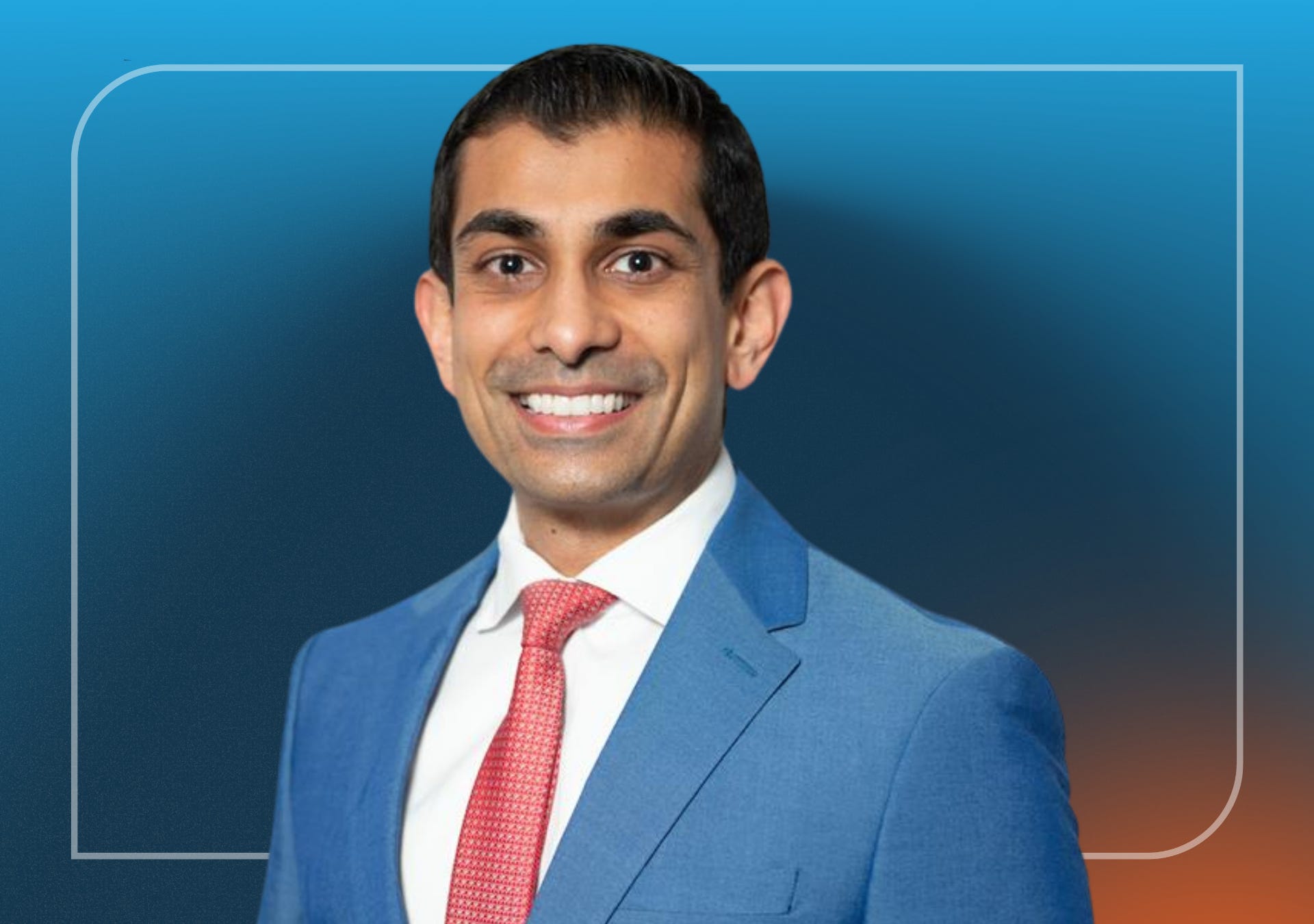
Parag Amin stared at Nick Rowley’s Mac knowing he had no idea how to fix it.
But he’d just made a deal: solve Rowley’s tech problem, and the legendary trial attorney would coach him through his first opening and closing statements. One Google search later, the problem was solved, and Amin’s personal injury career began in earnest.
Trust opened the door. Amin didn’t start in personal injury. He built his practice defending business owners, inspired by watching his immigrant father lose everything to unpaid taxes he didn’t know existed. But when a business client asked for help after a car accident, Amin said yes. The case worked. The numbers made sense. More importantly, it felt right to help someone who trusted him.
The shift came from leverage, not volume. Amin didn’t flood his practice with PI cases. He added them strategically, recognizing that personal injury offered better time leverage than business litigation. He focused on systems: VOIP phones that never ring more than twice. CRMs that humanize intake. Follow-up sequences built on empathy, not pressure.
Preparation replaced guesswork. Amin learned trial strategy from focus groups at Rowley’s office, watching jury reactions through one-way mirrors, studying how elite attorneys think through cases before they ever reach a courtroom. That preparation mindset carried into everything: marketing built on personal brand and “why,” not just “what.” Talent recruitment focused on understanding what matters to people, not just bidding highest.
The result: Top 100 settlements and verdicts in California. Including a multi-hundred-million-dollar business dispute win. Humanizing every phone call, every intake, every client relationship became the foundation of the practice.
“At the end of the day, on the other end of that phone is somebody who needs help. And just understanding that and humanizing that person whose face you haven’t seen because a phone call I think helps. I think that’s made a big difference in our intake process.”
The lesson: Expansion into personal injury doesn’t require abandoning your foundation. It requires applying the same discipline, systems, and trust that built your practice in the first place.
🎧 Personal Injury Mastermind: Ep 355 →


Automate Demand Drafts, Medical Chronologies, and Case Narratives in One Platform
Supio is an AI platform built for personal injury practices, designed to centralize demand drafting, medical chronologies, deposition prep, and case organization in a single workspace.
Demand drafting happens inside a structured editor where the AI expands life-impact sections, strengthens narrative arguments, and integrates medical documentation directly into the draft. The interface shows suggested edits side by side, allowing attorneys to accept or reject changes as they refine the demand.
Interactive medical chronologies turn thousands of pages into a clean event timeline. The platform automatically tags police reports, ED admissions, imaging, treatment notes, and provider updates, with each entry linked back to the exact page in the record set. This gives teams a fast way to understand injury progression and prepare negotiations.
CaseAware AI is trained to think like a PI attorney, recognizing injury patterns, provider roles, and liability context across a case file. Supio says its platform has been used on more than 27,000 cases and is trusted by firms including Phillips Law Group, Levinson & Stefani, Lundy Law, Plattner Verderame, and the Law Offices of J. Chrisp.
Why it matters: High-volume PI practices often juggle fragmented tools for drafting, records review, and case prep. Supio consolidates these steps so attorneys and case teams can produce consistent work more efficiently while staying focused on strategy and client outcomes.
Before you go
Disclaimer: Personal Injury Mastermind takes all reasonable steps to ensure accuracy in the materials we share, including articles, newsletters, and reports. These materials are intended for general informational purposes only and do not constitute legal advice. They may not reflect the most current laws or regulations. Always consult a qualified attorney for advice on a specific legal matter.


Thanks for reading. I'll be back next week. — Chris
If you received this newsletter from someone else, subscribe below. Questions? Contact us at newsletters@rankings.io.